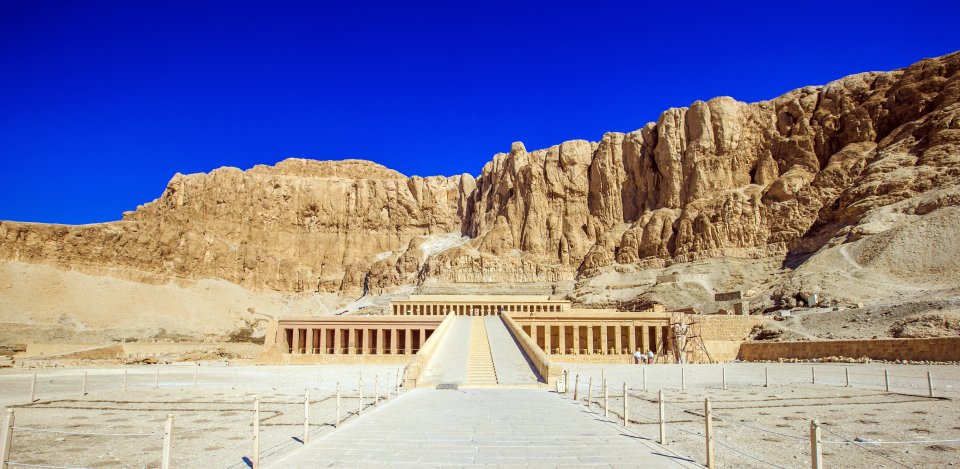
Hatshepsut, daughter of King Thutmose I, became queen of Egypt when she married her half-brother, Thutmose II. Upon his death, she began acting as regent for her stepson - Thutmose III, but later took on the full intensity of a pharaoh, becoming co-ruler of Egypt in 15th century BCE.
Hatshepsut extended Egyptian trade and oversaw ambitious building projects, most remarkably the Temple of Deir el-Bahri, placed in western Thebes, where she would be buried. Illustrated as a male in many contemporary images and sculptures, Hatshepsut last unknown to scholars until the 19th century. She is one of the few and most famous female pharaohs of Egypt. Nowadays, her heritage lives on in her surviving architectural achievements throughout the country.

Както всички други сайтове и мобилни приложения, при използване на Bohemia.bg ние събираме и обработваме Ваши лични данни. За гарантиране на Вашите права молим за Вашето съгласие. Моля, прегледайте внимателно за какви цели събираме Вашите лични данни.
Ако натиснете бутона "Приемам всички цели", ще дадете съгласието си за тях на Бохемия и на всички трети страни, описани детайлно в Политиката за поверителност и Политиката за бисквитките. Ако искате да получите повече информация или да направите специфични настройки само за конкретни цели, използвайте бутона "Настройки за поверителност".
