Руанда
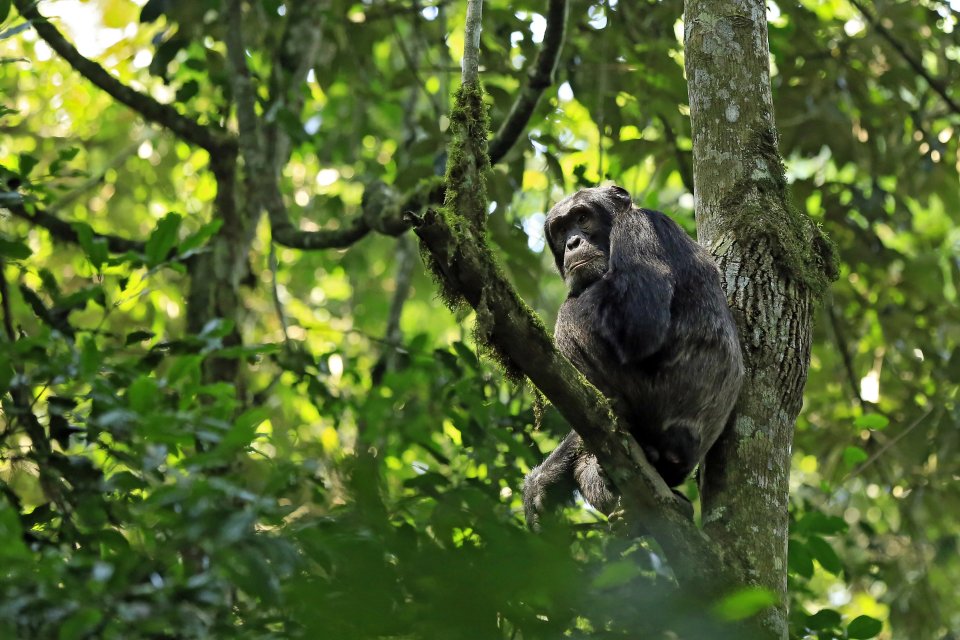
Chimpanzees (Pan troglodytes) are one of the closest living relatives to humans, sharing approximately 98% of their DNA with us. They are highly intelligent primates known for their complex social structures, advanced problem-solving abilities, and use of tools. Chimpanzees are native to the forests and savannas of West and Central Africa.
Physical Characteristics:
Chimpanzees have a robust build, with long arms and a short torso. They typically weigh between 40 to 150 pounds (18 to 68 kg) and stand about 3 to 5.5 feet (0.9 to 1.7 meters) tall when upright. Their bodies are covered in coarse black or dark brown hair, and they have expressive faces with prominent brows and large eyes.
Social Structure:
Chimpanzees live in communities that can range from 20 to over 100 individuals. These communities are characterized by strong social bonds, with complex hierarchies and relationships. They communicate through a variety of vocalizations, facial expressions, and gestures. Grooming is an important social activity that helps strengthen bonds between individuals.
Diet:
Chimpanzees are omnivorous, primarily feeding on fruits, leaves, seeds, and flowers. They also consume insects, small mammals, and occasionally hunt for meat, particularly during cooperative hunting activities.
Tool Use:
Chimpanzees are known for their ability to use tools, which they employ for various tasks such as extracting termites from mounds, cracking nuts, and using sticks to fish for ants. This behavior demonstrates their cognitive abilities and adaptability.
Conservation Status:
Chimpanzees are classified as endangered due to habitat loss, poaching, and the illegal wildlife trade. Conservation efforts are underway to protect their habitats and ensure their survival in the wild.
Overall, chimpanzees are remarkable creatures that exhibit a range of behaviors and social interactions, making them a subject of extensive research and fascination in the fields of primatology and anthropology.